
Why NASA's Asteroid Redirect Mission Failed
More Intelligent Public Engagement


We’ve claimed before at Taming Complexity that better public engagement can improve the trust and legitimacy of technical and scientific endeavors, leading to a better chance of public support and success. And yet, despite well run participatory technology assessments, ARM was a profound policy failure. Why didn’t the campaign of public participation have the effects we might expect?
The participatory technology assessment forums were, themselves, well organized and run. But they were, essentially, just tacked on to an existing process; a sort of after thought with limited impact on the ARM as a whole. This approach undermined the participatory forums in a number of ways.
First, the scope of participatory technology assessment was far too limited to have any substantial influence over public perception and support for the asteroid mission.
Public engagement through a single assessment over two forums is just not broad enough. The participatory technology assessment only consisted of 200 people in two locations. For the purposes of studying how such forums might work in practice, that’s a pretty exceptional size! But it definitely isn’t enough people from enough places to have any impact on overall public perception.
Perhaps small forums would be enough if they were being run regularly for all of NASA’s proposed missions, but this was the first, and only, of their kind for NASA. These forums weren’t one part of a broader trend of public participation in setting mission priorities for NASA. Imagine if, instead of a one-off that you probably have never heard about before now, every NASA mission engaged about 200 people in various cities and towns across America. Even if you, personally, were never included in deliberations, chances are you would still at least feel like NASA genuinely cared about working for people like you. But instead, by making these forums a one-off, NASA inherently limited the benefits of their impacts.
Second, the deliberations did not occur early enough while the goals and designs of the mission were still flexible.
It turns out that the Keck Institute for Space Studies published a study in 2012 about the feasibility of capturing and returning a small asteroid. This study, several years before the participatory technology assessment, was the basis for the concept of ARM. The Keck proposal’s “key example” of why such a mission would be useful is as a jump start for asteroid mining. The proposal notes that the expense of getting high density materials, like water, beyond Earth’s orbit might make mining those materials from captured asteroids economically feasible. What the Keck report outlined was a mission that would contribute the foundations to a future where we captured asteroids for their resources. ARM would test the basic technologies and techniques necessary to open up that future as a possibility.
In other words the purpose of the Keck proposal was agenda setting. Agenda setting answers the question: which issues are appropriate for the system of policy making to take into account? In the vast set of all possible problems for the government to address, which ones are even in consideration? In the case of spaceflight, agenda setting is especially important. It can be hard to determine what policies and missions NASA should even consider when so much of their work can seem like science fiction. The Keck proposal takes the very science fiction idea of asteroid mining and connects it to a very feasible and achievable mission. It makes asteroid mining something that NASA and policy makers can take seriously.
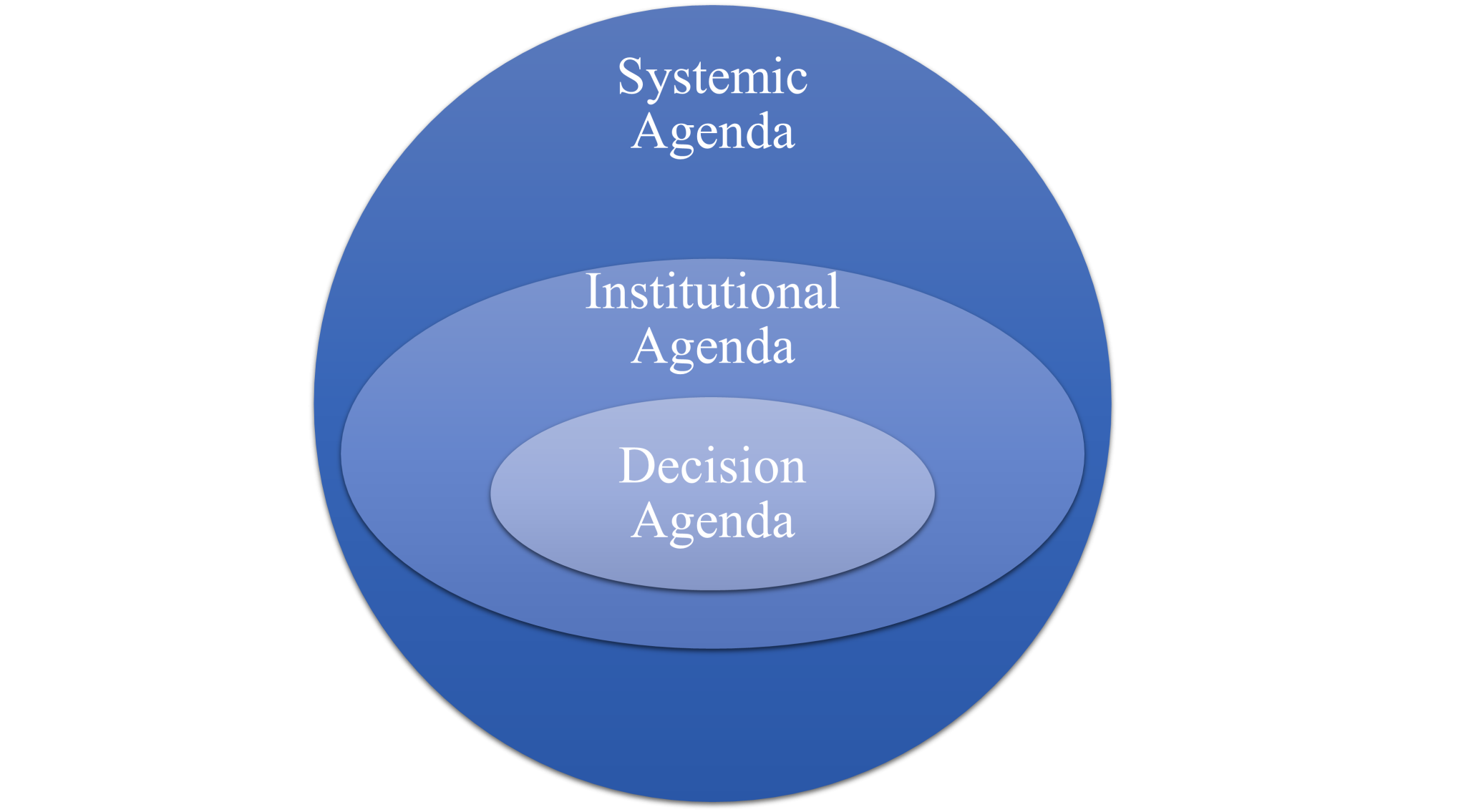
So the Keck proposal set the agenda for the ARM mission before public engagement even began. The choices on the table for the public forum participants to deliberate over were already pre-determined. By not occurring early enough to influence agenda setting for the mission, the impact of public engagement was fundamentally limited.
Moreover, a NASA mission is a pretty technical undertaking. Just because something is technical, doesn’t mean that the broader public shouldn’t get a substantial say. However, the further along in the process, the more central technical decisions become. The beginning stages of developing a mission start with questions about priorities and values. What do we care about more: scientific objectives, testing and demonstrating new technologies, or the prestige of human spaceflight? But the further along the mission gets, the more the questions start looking like: what kind of sensor will get the data that we need given our power constraints? The ARM forums weren’t looking at questions nearly so technical as this, but they also certainly were not giving people influence over basic values decisions.
In the end, the results of the participatory technology assessment just weren’t very influential over the final design of the mission.
In the Keck proposal, planetary defense (figuring out how to keep asteroids from smashing into us) is a secondary consideration. The conception of ARM outlined in the Keck proposal has “synergy with planetary defense,” but planetary defense is not the purpose. These differing values from the results of the participatory technology assessment show themselves in the decisions made about ARM.
The first step to planetary defense is knowing what’s out there: finding and tracking threatening near Earth asteroids (NEAs). Similarly, the first step for asteroid mining is surveying NEAs for those with water or valuable minerals. On the surface, it seems like ARM could achieve both of those goals at the same time, but it turns out the dangerous asteroids and the valuable ones are totally different.
The majority of potentially hazardous NEAs are S-type asteroids. These mostly consist of silicone based rocks and iron. They don’t contain anything valuable enough to mine. On the other hand C-type asteroids, which are rich in volatile (watery) and organic compounds are much better targets for asteroid mining. While ARM did not have a future target asteroid by the time Congress cancelled it, NASA used 2008 EV5, a C-type asteroid, for planning and in simulations.
Even if you find a dangerous asteroid heading towards Earth, you still have to do something about it. As epic as landing a drilling team to bury a nuclear bomb deep inside the asteroid and then blowing it up would be, it would be a lot less dangerous to just use gravity to nudge it onto a different trajectory.

But, “the best laid schemes of mice and men go often askew.” The universe is a complicated place, and the theory of gravitational deflection is not likely to match the reality of practice. It would certainly be best to have some experience before the real deal. The original ARM plan called for just this practice. A small robotic spacecraft would use its own gravity to “tow” a small asteroid into lunar orbit. Once there, NASA could send other spacecraft, or even astronauts, to study the asteroid relatively easily.
Then, in 2014, the NASA Advisory Council (NAC) advised NASA to review the mission design in light of the risk of potential cost overruns. So NASA developed an alternative where, rather than practice gravitational towing, the spacecraft would be fitted with a robotic arm that would lift a small boulder from a larger asteroid and move just that boulder into lunar orbit. Option A versus option B. While option B would not be useful for learning about planetary defense, at least it would help prevent potential cost overruns right?
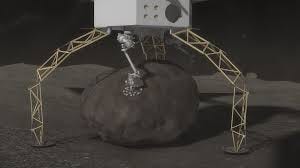
Well, not exactly. Independent cost and technical assessments of the mission indicated that option B would likely cost $100M more! And worse, by this point, members of Congress had already voiced their concerns over the quickly escalating costs of ARM, and were already publicly considering denying funding for the mission in appropriations. It seems NASA officials managed to simultaneously ignore the priorities set participatory technology assessment AND the very clear warnings from Congress.
A cynical interpretation might be that they were trying to appease the industry interests represented in the Keck proposal. But more likely is that the Keck proposal simply came first. It established the underlying purpose for the mission, the values through which decision-makers interpret their choices. And since there were no alternative interests vested with actual decision-making authority, no room in NASA decision-making structure for disagreement, there was also no one to question those initial values when it came time to make important decisions.
So what does this failure teach us about public deliberation? It teaches us that deliberation is not sufficient in and of itself. It may seem obvious to say, decision-makers have to actually act on the product of deliberations for them to have any meaningful impact. Making that actually happen is trickier. First, deliberations have to happen early enough, or else agenda setting and good old fashioned decision momentum will undermine the results. And second, it must be continuous. It is not enough to have a one-and-done discussion. Baking in the kinds of diversity of perspectives that comes from a well designed deliberation all throughout the decision-making process will prevent the kind of ossification of policy direction that eventually doomed the Asteroid Redirect Mission.
 | A guest post by
|